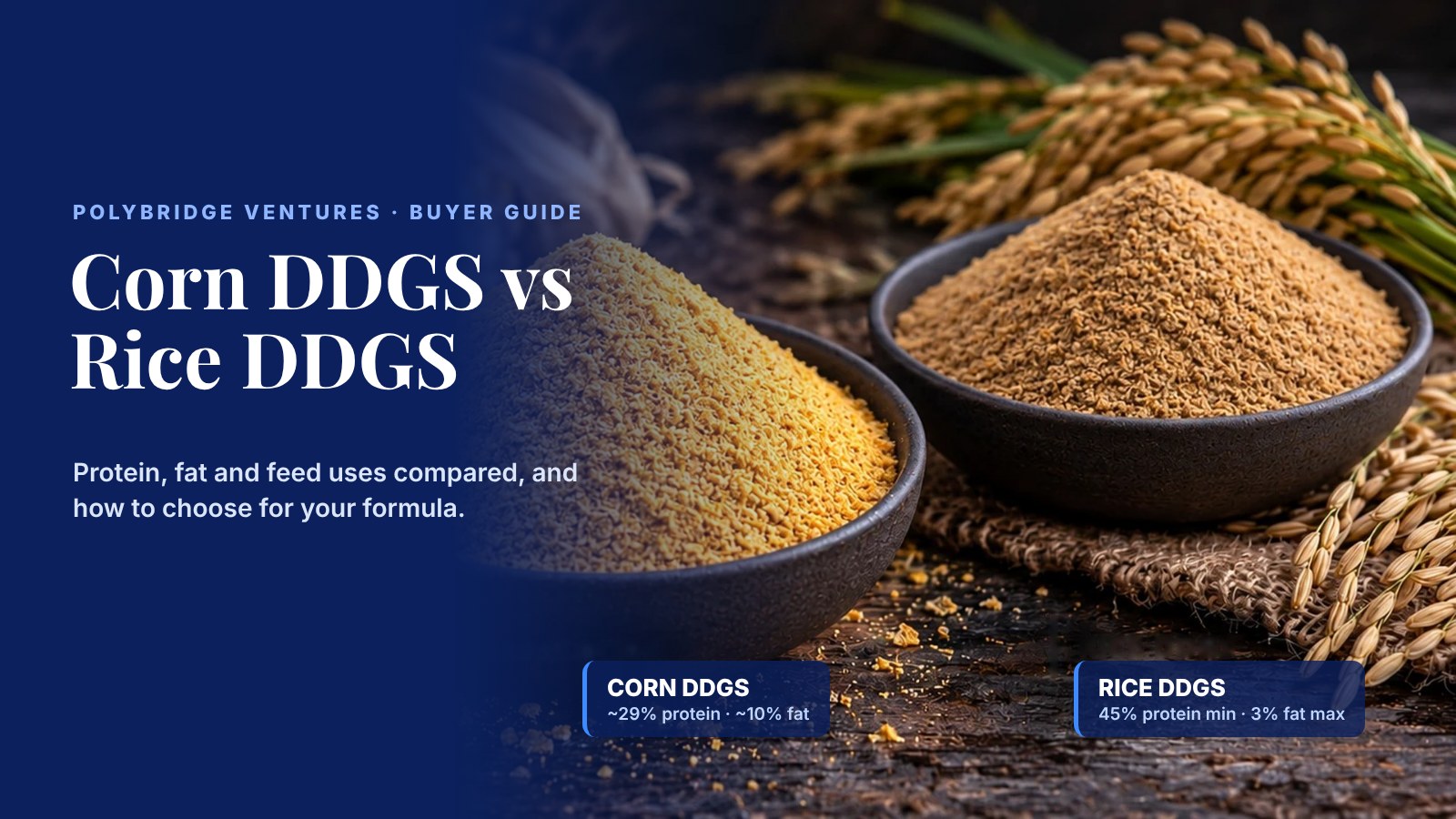
Quick answer: Rice DDGS is the high-protein, low-fat option: our rice DDGS is supplied at 45% crude protein minimum and 3% fat maximum. Corn DDGS has less protein, about 29% in our recent lots, but about 10% fat, so it supplies energy as well as protein. Choose rice DDGS when protein is the priority, for example in poultry and fish feed, and corn DDGS when you also want energy. Both are traded under HS 2303.30 and shipped from India in powder or pellet form.
Corn DDGS vs rice DDGS at a glance
| Parameter | Corn DDGS | Rice DDGS |
|---|---|---|
| Made from | Maize after ethanol production | Broken rice after ethanol production |
| Crude protein | About 29% (28.6–29.3%, 3 lots) | 45% minimum |
| Crude fat | About 10% | 3% maximum |
| Crude fibre | About 8.4% | 6% maximum |
| Moisture | About 7.5% | 12% maximum |
| Ash | Per lot test report | 5.5% maximum |
| Aflatoxin | Per lot test report | 30 ppb maximum |
| Colour | Golden yellow | Light tan |
| Main strength | Protein plus energy | High protein, low fat |
Corn DDGS values are averages of independent laboratory tests on three recent lots supplied by Polybridge Ventures. Rice DDGS values are the limits on our Certificate of Analysis.
Why the two types are so different
DDGS is what remains after the starch in a grain is fermented to ethanol. The protein, fat and fibre left behind are concentrated roughly three times. Maize contains more oil than rice, so corn DDGS ends up with around 10% fat. Broken rice contains very little oil but its protein concentrates strongly, so rice DDGS ends up with far more protein and much less fat.
Protein and amino acids
Rice DDGS carries about one and a half times the protein of corn DDGS, which makes it a useful partial replacement for higher-cost protein meals. Protein quality matters as much as quantity, though. Published Indian data shows rice DDGS lysine in the range of about 0.6–1.2%, far below soybean meal at about 3%. Formulas using rice DDGS usually need synthetic lysine or another lysine-rich ingredient to stay balanced. Ask your nutritionist to formulate on digestible amino acids, not crude protein alone.
Energy and fat
The extra fat in corn DDGS adds energy, so it can replace part of both the maize and the soybean meal in a diet. Rice DDGS adds little energy, which suits diets where energy already comes from grain or oil and the gap is protein. High-fat DDGS can also soften carcass fat in pigs, which is one reason pig producers limit corn DDGS in finishing diets.
Which type for which feed
| Feed type | Good fit | Why |
|---|---|---|
| Broiler feed | Rice DDGS or corn DDGS | Rice DDGS for protein; corn DDGS where energy is also needed |
| Layer feed | Corn DDGS or rice DDGS | Corn DDGS also supplies the yellow pigments that colour yolks |
| Fish and shrimp feed | Rice DDGS | High protein and low fat suit most aqua formulas |
| Dairy and cattle feed | Corn DDGS | Protein plus energy for ruminants |
How much can you include?
Inclusion levels depend on species, age, the rest of the formula and the lot analysis, so your nutritionist should set them. As a starting point from published research:
- Rice DDGS in poultry: researchers at ICAR's Directorate of Poultry Research found it can be included at up to 10% of broiler diets and 7.5% of layer diets without harming performance, with the best results at around 5%.
- Corn DDGS in poultry: studies have used it at up to about 15% of broiler diets without harming growth.
How to choose
- Start from your formula's gap. If you are short of protein, compare rice DDGS. If you need protein and energy, compare corn DDGS.
- Compare cost per unit of protein, not price per tonne. Rice DDGS may cost more per tonne, but it delivers more protein in each tonne.
- Check the safety limits your market needs, such as aflatoxin, and agree them in writing before the order.
- Order samples of both and run them through your nutritionist's formula before committing to a container.
Buying corn or rice DDGS from India
Polybridge Ventures LLP supplies both types from India as powder or pellets, in 50 kg bags or jumbo bags, with a minimum order of one full container load. Every lot ships with its laboratory test report or Certificate of Analysis.
See the full specifications on our corn DDGS and rice DDGS pages, and read our DDGS buyer's guide for documents and import rules by country. Ready to compare samples? Request a quote.
Sources: Raju, Rama Rao and Prakash, ICAR-Directorate of Poultry Research, Indian Journal of Animal Research 56(2), 2022; review of rice DDGS composition, SR Publication. Polybridge Ventures lot data and Certificate of Analysis limits.