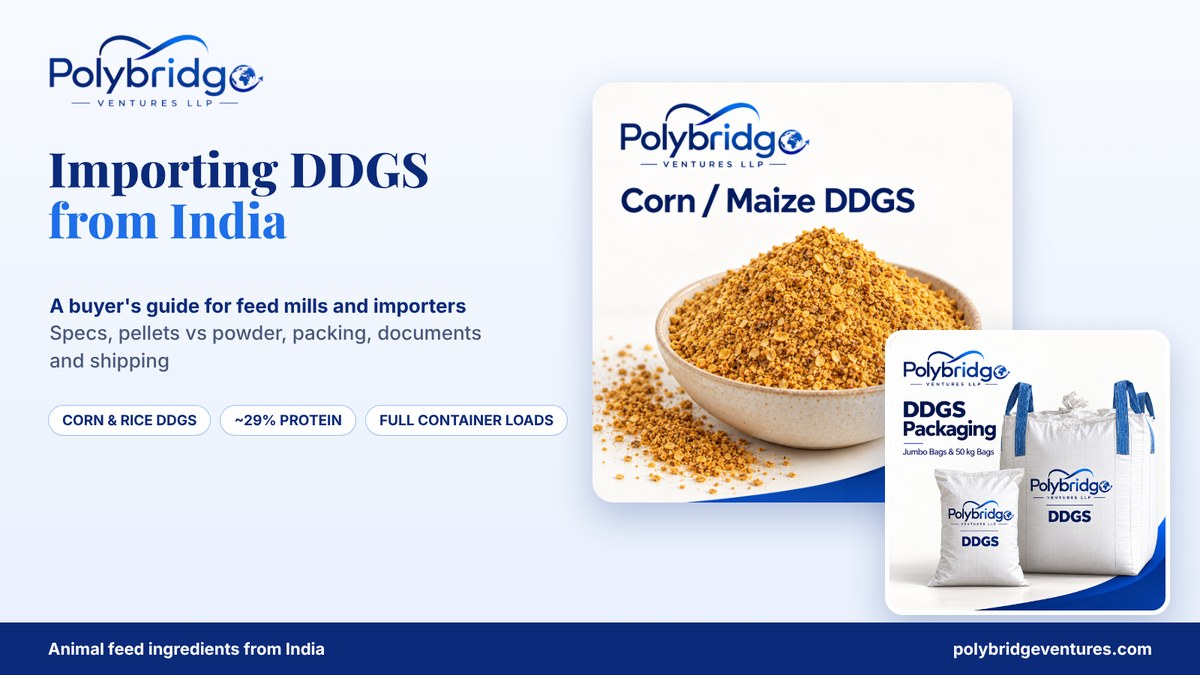
Quick answer: To import DDGS (Distillers Dried Grains with Solubles) from India, agree a specification based on a recent lab analysis (protein, fat, fibre, moisture and ash), choose corn or rice DDGS in powder or pellet form, and confirm packing (50 kg bags or jumbo bags) and a full container load (FCL) order. Before you order, check your own country's feed import licence and certificate requirements. Indian DDGS ships in containers from major ports such as Mundra, Nhava Sheva (JNPT), Hazira and Visakhapatnam.
This guide is for feed mills, compound feed manufacturers, livestock and aquaculture producers, and feed importers. It is written by Polybridge Ventures LLP, an exporter of DDGS and spices based in Ahmedabad, India.
What is DDGS?
DDGS is the dried co-product left after grain is fermented to make ethanol. The fermentation uses up most of the starch, so the remaining protein, fat and fibre of the grain are concentrated, together with the condensed solubles, into a dry, stable feed ingredient. Feed formulators use it as a protein and energy source, often as a partial replacement for soybean meal and maize.
India produces two main types:
- Corn (maize) DDGS: golden yellow, from maize-based distilleries. It is the most widely traded type worldwide.
- Rice DDGS: lighter tan, from distilleries that use broken rice and other grains.
Composition depends on the grain, the plant and the drying process, so always buy against a lab analysis, not a product name.
Why buyers are sourcing DDGS from India
India's ethanol blending programme has expanded grain-based ethanol production, and with it the supply of DDGS. Exports have risen sharply. According to the Grain Ethanol Manufacturers Association (GEMA), maize DDGS exports grew from about 21,000 tonnes in 2023 to about 288,000 tonnes in 2024, while rice DDGS exports reached about 60,000 tonnes in 2024. For buyers in South and Southeast Asia and the Middle East, India's ports offer a short shipping route compared with more distant origins.
Typical DDGS analysis
The table below shows independent laboratory results for three recent lots of DDGS supplied by Polybridge Ventures, tested by an ISO 9001 certified lab using FSSAI methods. Values vary from lot to lot, so each shipment is confirmed with its own test report.
| Parameter | Typical value | Range across 3 lots |
|---|---|---|
| Crude protein | About 29% | 28.6–29.3% |
| Crude fat | About 10% | 9.8–10.5% |
| Crude fibre | About 8.4% | 8.2–8.6% |
| Moisture | About 7.5% | 6.8–8.2% |
| Carbohydrate | About 48.8% | 48.8–48.9% |
What to put in your DDGS specification
- Type and form: corn or rice DDGS, powder (meal) or pellets.
- Nutrient limits: minimum protein, minimum or maximum fat, maximum fibre, moisture and ash.
- Physical quality: colour, smell (free from burnt or sour odour), and freedom from foreign matter and live insects.
- Safety tests: any additional tests your market or nutritionist requires, such as mycotoxins, Salmonella or heavy metals, and which laboratory will run them.
- Packing and quantity: bag type, number of containers and delivery schedule.
Agree the specification and the tests in writing before production, and approve a sample against it.
Powder or pellets?
| Form | Best for |
|---|---|
| Powder (meal) | Feed mills that mix DDGS into mash feed or run their own pellet line |
| Pellets | Buyers who want less dust, better flow in conveyors and silos, and more product per container |
How DDGS is used in feed
- Poultry feed: broiler and layer diets.
- Cattle and dairy feed: as a protein supplement for ruminants.
- Aquaculture feed: fish and shrimp feed formulations.
Inclusion rates depend on species, age and the rest of the formula. Your nutritionist should set the level based on the lot analysis.
Packing and shipping
- 50 kg bags: woven PP bags, suited to manual handling and smaller feed mills.
- Jumbo bags (FIBC): bulk bags with lifting loops, for faster loading and unloading.
- Order size: DDGS is usually traded by the full container load (FCL). Ask your supplier for the expected net weight per container for your form and packing, as pellets load more weight than powder.
Keep DDGS dry and ventilated during storage and transit. High moisture and heat can cause caking, mould and loss of quality, so check moisture on arrival.
Export documents
| Document | Purpose |
|---|---|
| Commercial invoice and packing list | Value, quantity, bag count and weights for customs |
| Bill of lading | Shipping line's receipt and title document |
| Certificate of origin | Proves Indian origin, and can reduce duty where a trade agreement applies |
| Laboratory test report | Analysis of the lot against the agreed specification |
| Health, phytosanitary or "fit for animal consumption" certificate | Required by many importing countries for feed ingredients |
| Other certificates | Some markets also ask for GMO-free or radioactivity test certificates |
DDGS is classified under HS subheading 2303.30 (brewing or distilling dregs and waste). Your country adds further digits.
Import notes by market
Bangladesh
Bangladesh customs lists several requirements for HS 2303.30 imported as feed. These include an animal feed import licence or prior permission (NOC) from the Department of Livestock Services, or a fish feed licence from the Department of Fisheries, plus per-consignment certificates such as a GMO-free certificate, a radioactivity test certificate and a "fit for fish and animal consumption" certificate from the exporting country's competent authority. Confirm the current list with your clearing agent.
Southeast Asia: Vietnam, Indonesia, Thailand, Malaysia and the Philippines
Feed ingredients are regulated by each country's agriculture or livestock authority. Importers usually need to be registered for feed imports, and shipments may be inspected and tested on arrival. Check with your authority which certificates must travel with the goods and whether the product needs to be registered before the first shipment.
East Asia: Japan and South Korea
Both markets apply strict quality and safety checks to feed ingredients, including contaminant testing. Agree the test parameters and laboratory with your supplier before production.
Middle East: Saudi Arabia and Israel
Feed imports need approval from the national food or agriculture authority, and certificates are checked at entry. Your importer or clearing agent can confirm the current documents.
Rules change, so always confirm current requirements with your clearing agent or feed authority before the first shipment.
How to order DDGS from Polybridge Ventures
- Send the DDGS type (corn or rice), form (powder or pellets), packing, number of containers and destination port.
- We confirm the specification, price, samples and documents in a written quotation.
- You approve the sample and the lot analysis before the order is placed.
- We pack and load to your requirements and share the shipping documents.
See full specifications, images and the technical data sheet on our DDGS product page, or browse our animal feed range. New to importing from India? Read our step-by-step import guide. Ready to buy? Request a quote.